Primary Crane Structures
The foundation of any industrial lifting system is the crane structure itself. We categorize these primarily by how they span the workspace and support the load.
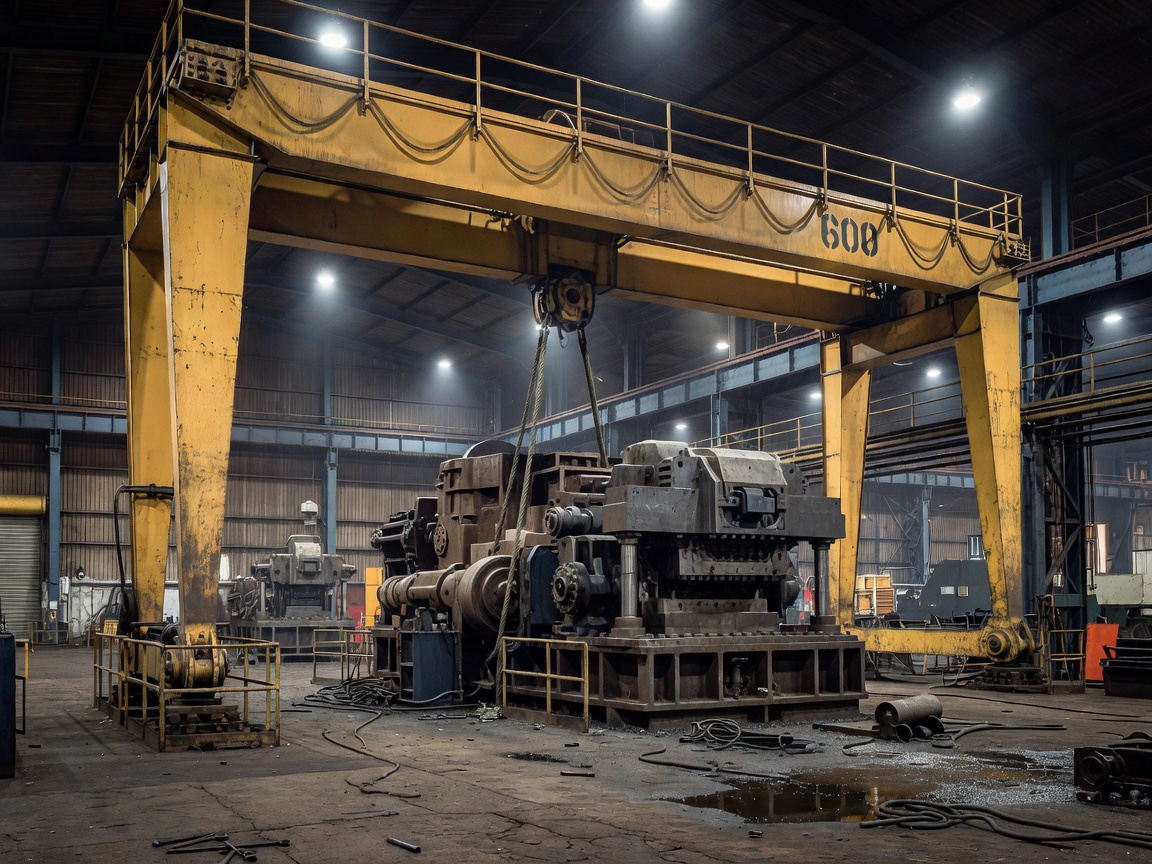
Overhead Cranes, also known as bridge cranes, run on elevated tracks integrated into the building's architecture. They offer excellent floor clearance and high lift capacities. Gantry Cranes serve a similar function but are supported by heavy legs that run along ground-level tracks, often used outdoors or in facilities that cannot support a building-mounted runway.
Jib Cranes are localized lifting solutions. They consist of a horizontal boom mounted to a wall or a freestanding floor pillar, providing rotational lifting over a specific workstation rather than spanning an entire facility.
The Lifting Mechanism
While the crane structure provides movement across axes, the core lifting work is done by the Hoist. Hoists use an internal drum or chain sprocket system connected to a motor and gearbox to raise and lower materials. They rely heavily on the integrity of the lifting medium—most commonly, robust Wire Ropes or heavy-duty load chains.
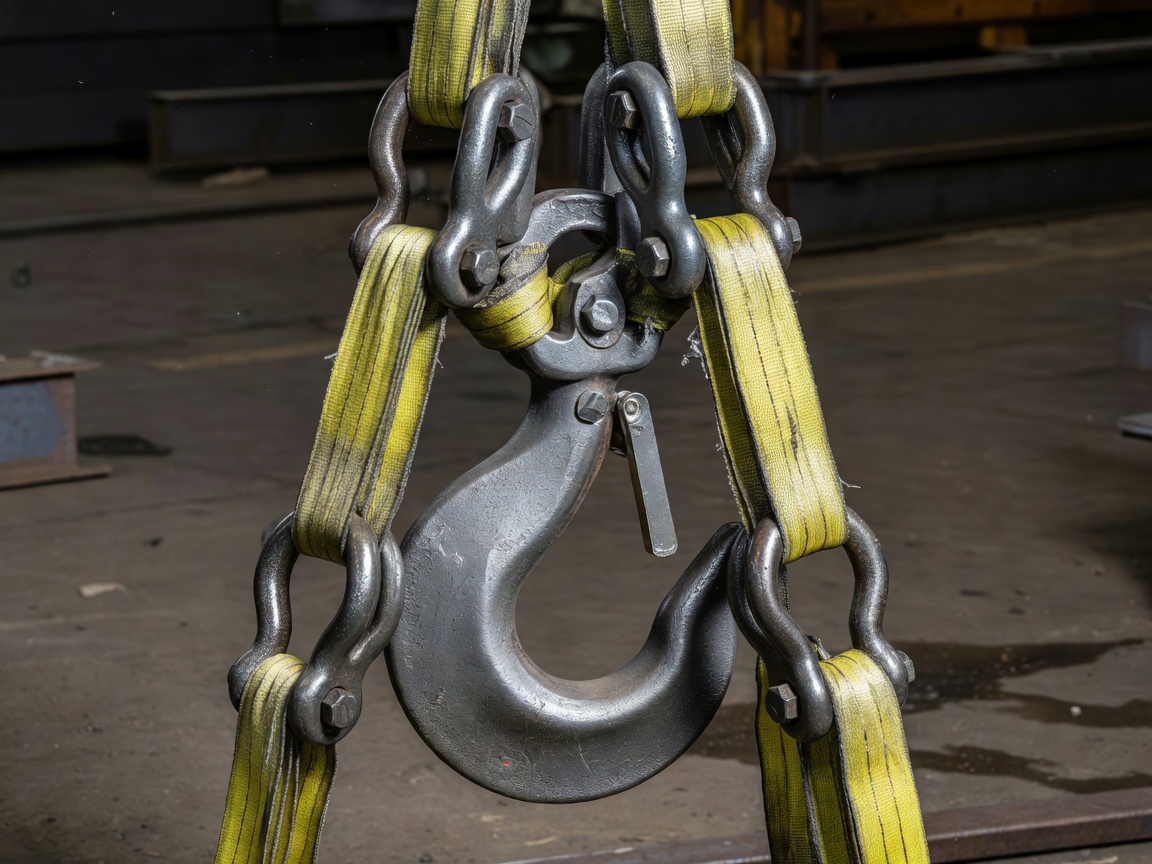
At the very end of the wire rope sits the Hook. The hook is the primary connection point. It must be equipped with a functional safety latch to prevent the lifting accessory from slipping out during slack conditions, and it must rotate freely on a thrust bearing to prevent twisting of the wire ropes.
Below-the-Hook Accessories
Load-handling accessories are just as critical as the crane itself. Connecting the load to the hook requires specific gear matched to the load's shape, weight, and center of gravity.
Slings are made from wire rope, synthetic web, or chain. Synthetic slings protect delicate loads from scratching, while chain slings are used for extreme heat or abrasive conditions. Shackles are the robust metal links used to connect slings to the load's lifting points safely. All accessories require thorough visual inspection prior to every use, as they take the most direct physical abuse on the floor.